How APIs Accelerate B2B Integration in Electronics Procurement
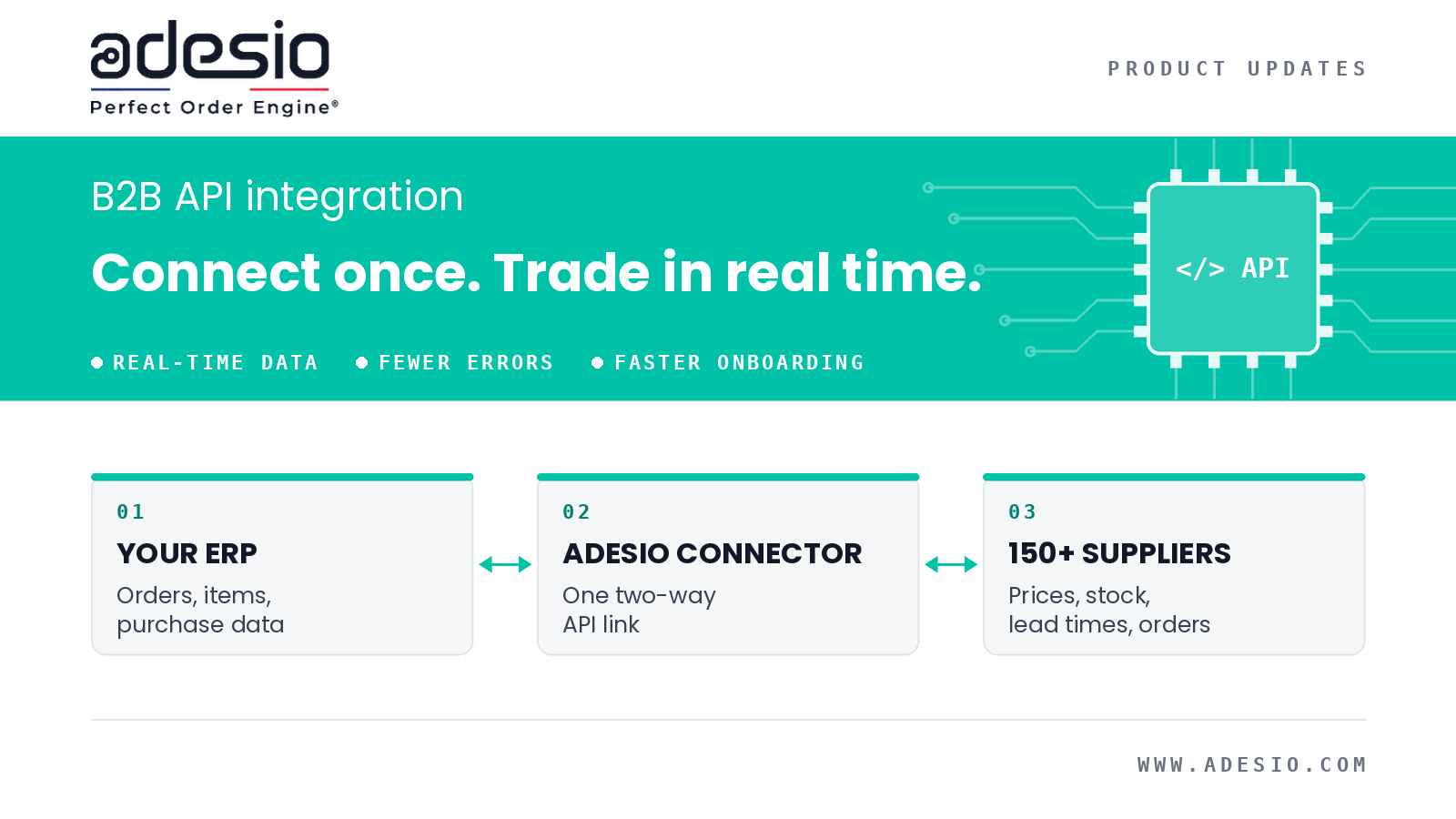
In electronics procurement, a lot of business still runs on email. Buyers send RFQs as spreadsheets, suppliers reply with PDFs, and someone re-keys prices, stock and order confirmations into the ERP. Every step is slow, and every copy is a chance for an error. B2B API integration changes that: systems talk to each other directly, in real time, without anyone copying data from one screen to another. That’s what Adesio does: it synchronises your ERP with your suppliers’ CRMs in real time.
What is a B2B API integration?
An API (application programming interface) is a standard way for two systems to exchange data. In a B2B integration, it connects one company’s systems to another’s: a buyer’s ERP to a supplier’s catalogue and order system, for example.
Instead of emailing “What’s your price and stock for this part number?”, the buyer’s ERP sends the question through the API to the supplier’s CRM and gets the answer in seconds. Orders, acknowledgements and shipping updates flow the same way, in both directions.
Email, EDI or API: what changes
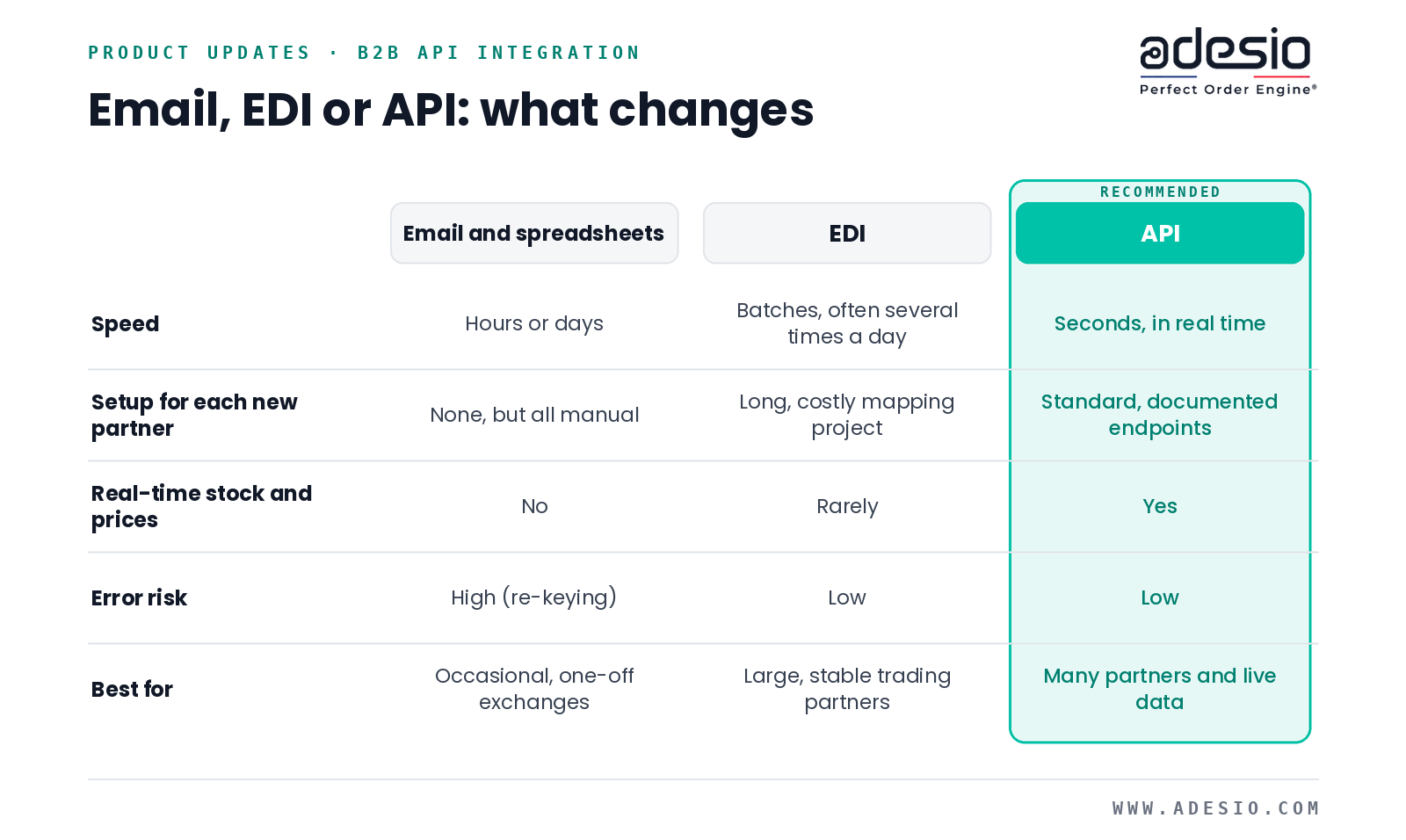
EDI is still common between large partners, and it works well for stable, high-volume flows. APIs are lighter to set up and better suited to live data such as stock and prices, which change by the hour in electronics.
5 ways APIs accelerate B2B integration
- Real-time data. Prices, stock and lead times come straight from the supplier’s system, not from a quote that’s already out of date.
- Faster onboarding. With standard, documented endpoints, connecting a new partner takes days or weeks rather than months.
- Fewer errors. No re-keying means no typos in part numbers, quantities or prices.
- Automated workflows. RFQs, purchase orders, acknowledgements and shipping updates move between systems on their own, so buyers focus on decisions.
- Easy to scale. Once your ERP is connected, adding a supplier doesn’t mean starting a new integration project.
What to look for in a B2B API
- Clear documentation, with examples, so developers can connect quickly.
- Security: authentication, encrypted connections and access limited to the right data.
- Reliability: clear error messages, stable versions and published rate limits.
- Event notifications (webhooks), so you’re told when an order ships instead of having to ask.
- Clean component data: consistent manufacturer part numbers, so records match across systems.
How Adesio uses APIs
Adesio Connector applies these principles to electronics procurement:
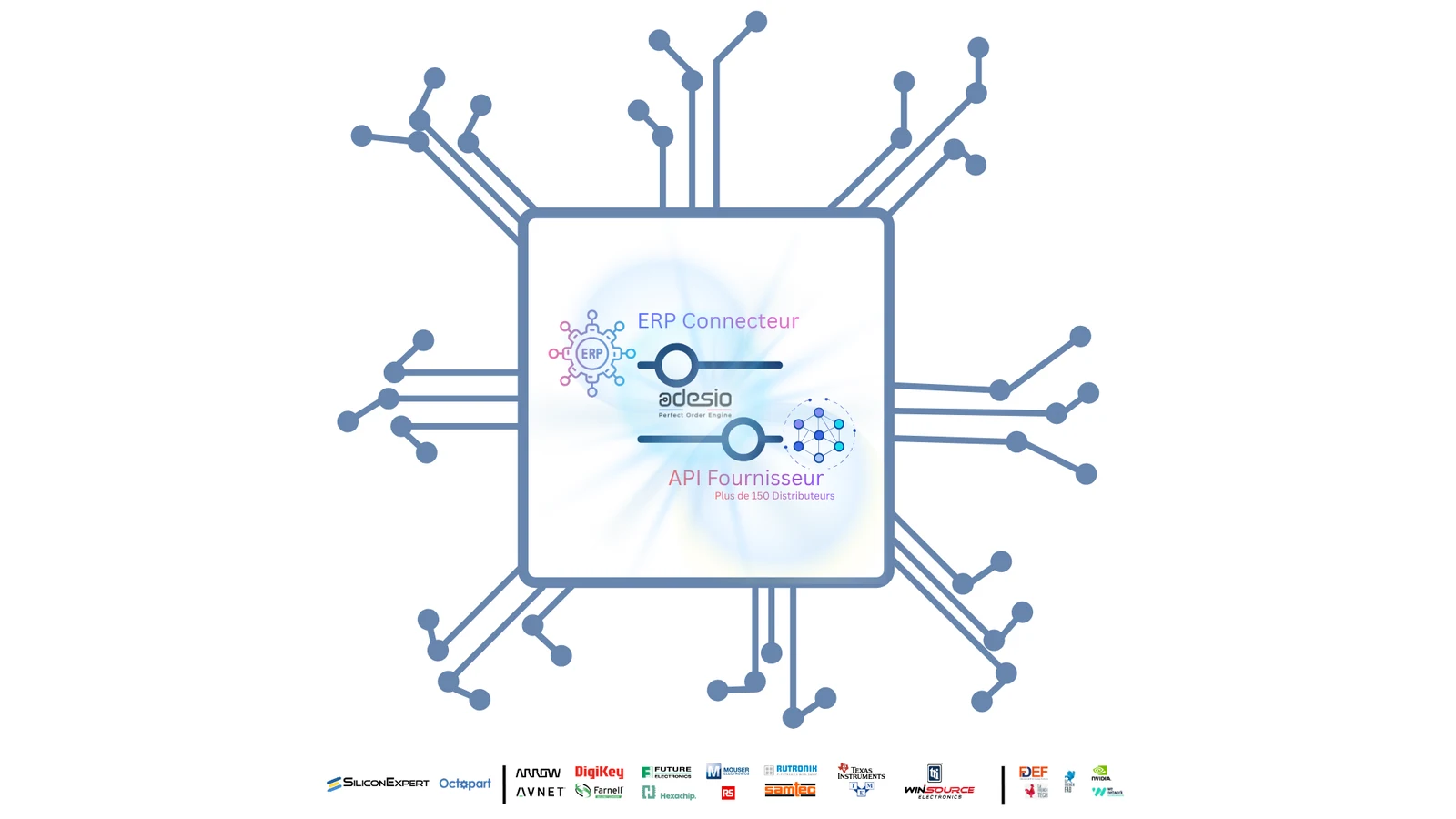
- For buyers: Adesio synchronises your ERP with your suppliers’ CRMs in real time, across 150+ connected suppliers. Prices, stock, orders and confirmations flow both ways, without re-keying.
- For suppliers and distributors: connect your API once, and your stock and prices become visible to EMS and OEM buyers, whose orders reach you through the same API.
The result is procurement automation from end to end: from the BOM to the purchase order, without spreadsheets in between.
Connect once, trade in real time
Adesio | contact@ades.io | +33 2 59 16 05 56
- #Procurement Automation
- #B2B API Integration
- #Suppliers & ERP Integration
Frequently asked questions
What is a B2B API integration?
A direct connection between two companies’ systems, such as a buyer’s ERP and a supplier’s order system, so they exchange data like prices, stock and orders automatically and in real time.
Do I need to integrate an API for each supplier?
Yes. Contact support@ades.io for the complete API integration guide.
Is my data secure?
Yes. Your BOMs, prices and orders are stored securely and shared only with the suppliers you choose. Within your company, access follows each user’s role.
Discover the Perfect Order Engine®
See how Adesio turns your complex BOMs into purchase orders, using your own data.
Related articles
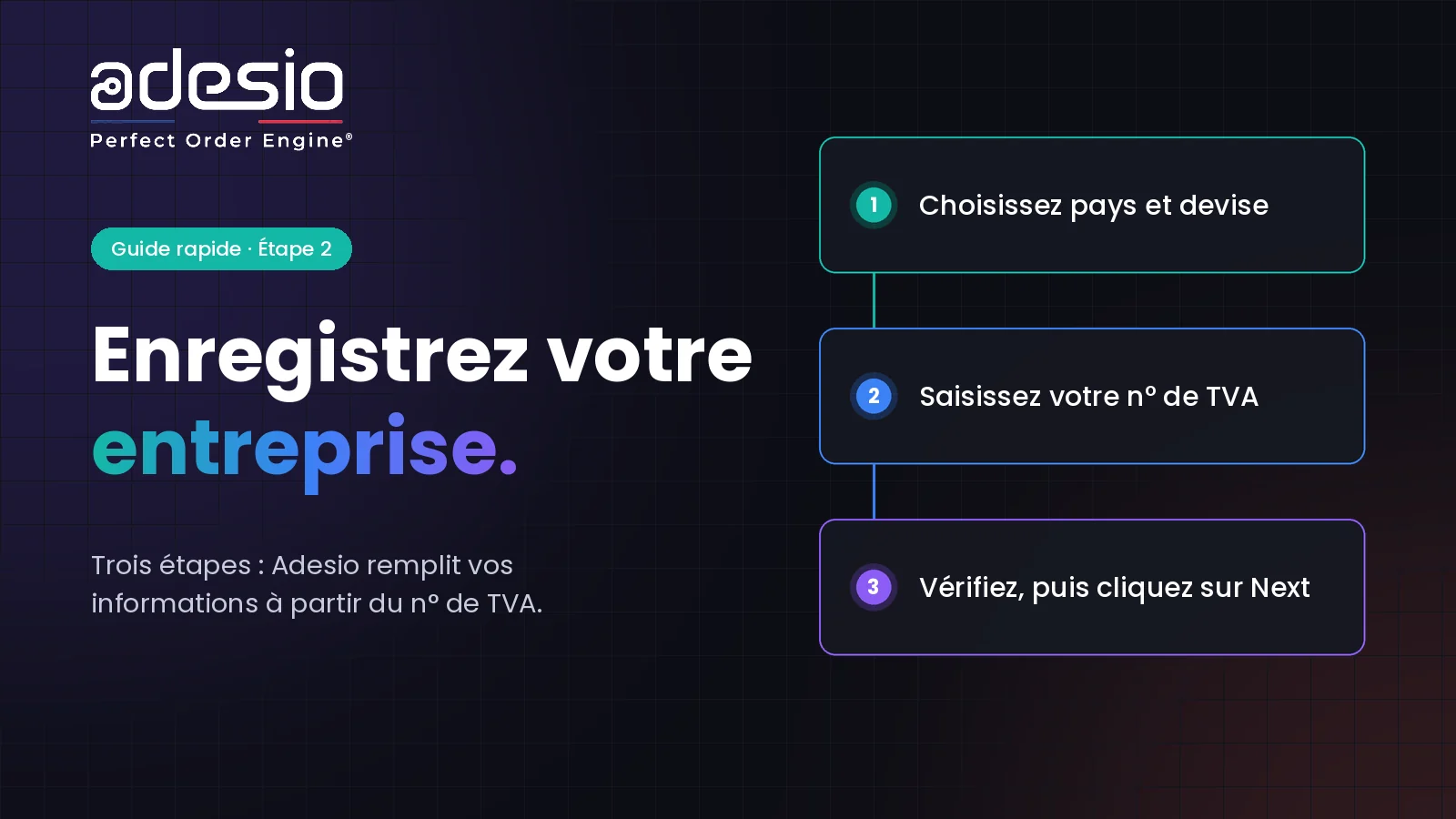
How to Register Your Company Profile in Adesio
Register your company in Adesio in three steps: country and currency, VAT number with automatic company details, then a quick check before saving.
- #Onboarding
- #Procurement Automation
- #Suppliers & ERP Integration
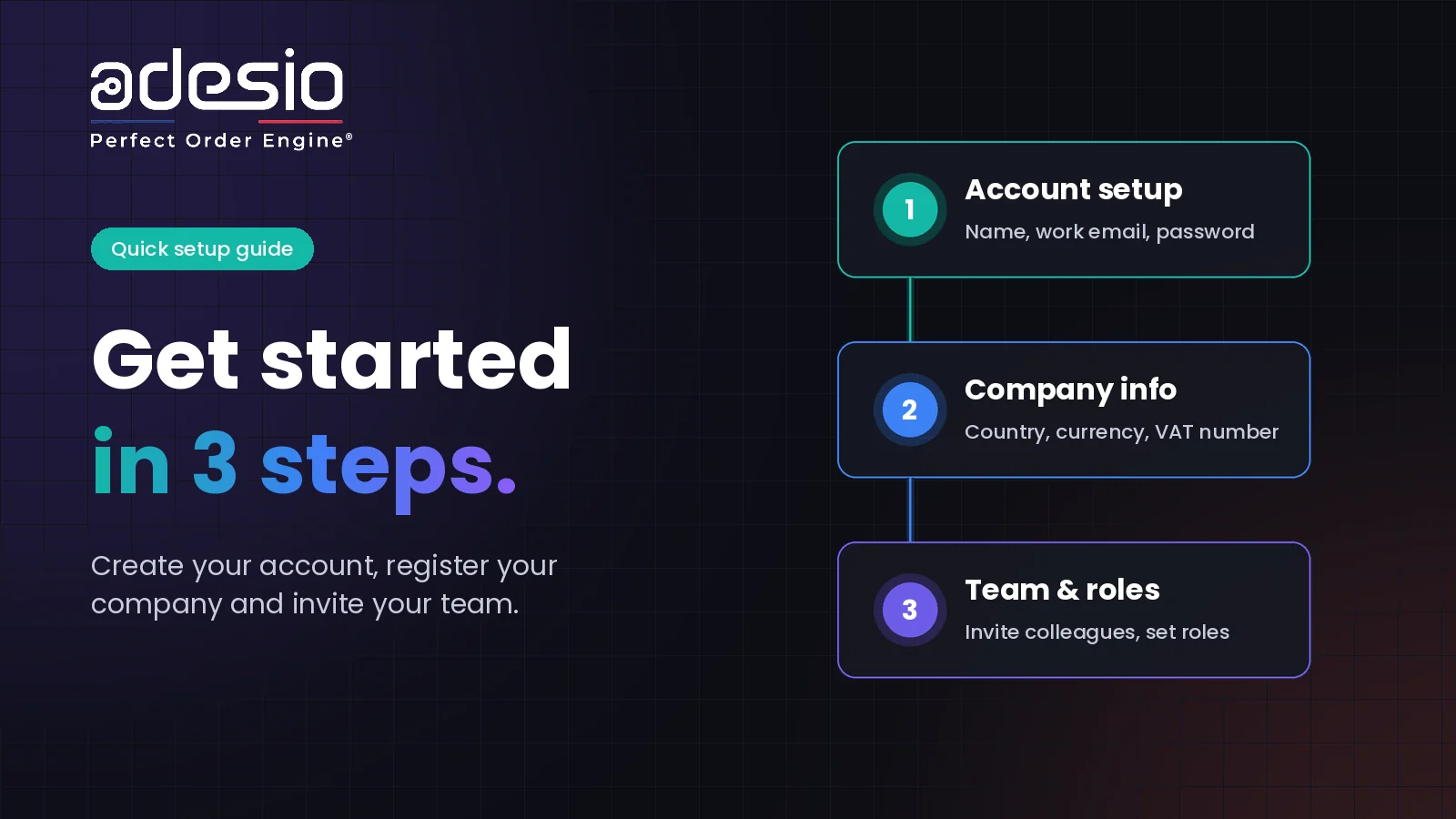
Getting Started with Adesio: Quick Account Setup
Set up your Adesio account, how to register your company, and invite your team step-by-step.
- #Onboarding
- #Procurement Automation
- #Suppliers & ERP Integration
Meet Adesio Connector: A Two-Way API Link to Your Suppliers and ERP
Meet Adesio Connector: Adesio connects you with suppliers around the world and syncs with your ERP, with no more emails, PDFs or spreadsheets.
- #Suppliers & ERP Integration
- #B2B API Integration
- #Vendor Onboarding & Management