Buying from Chinese Component Suppliers: Questions on Trust and Quality
Buying from Chinese Component Suppliers: Questions on Trust and Quality
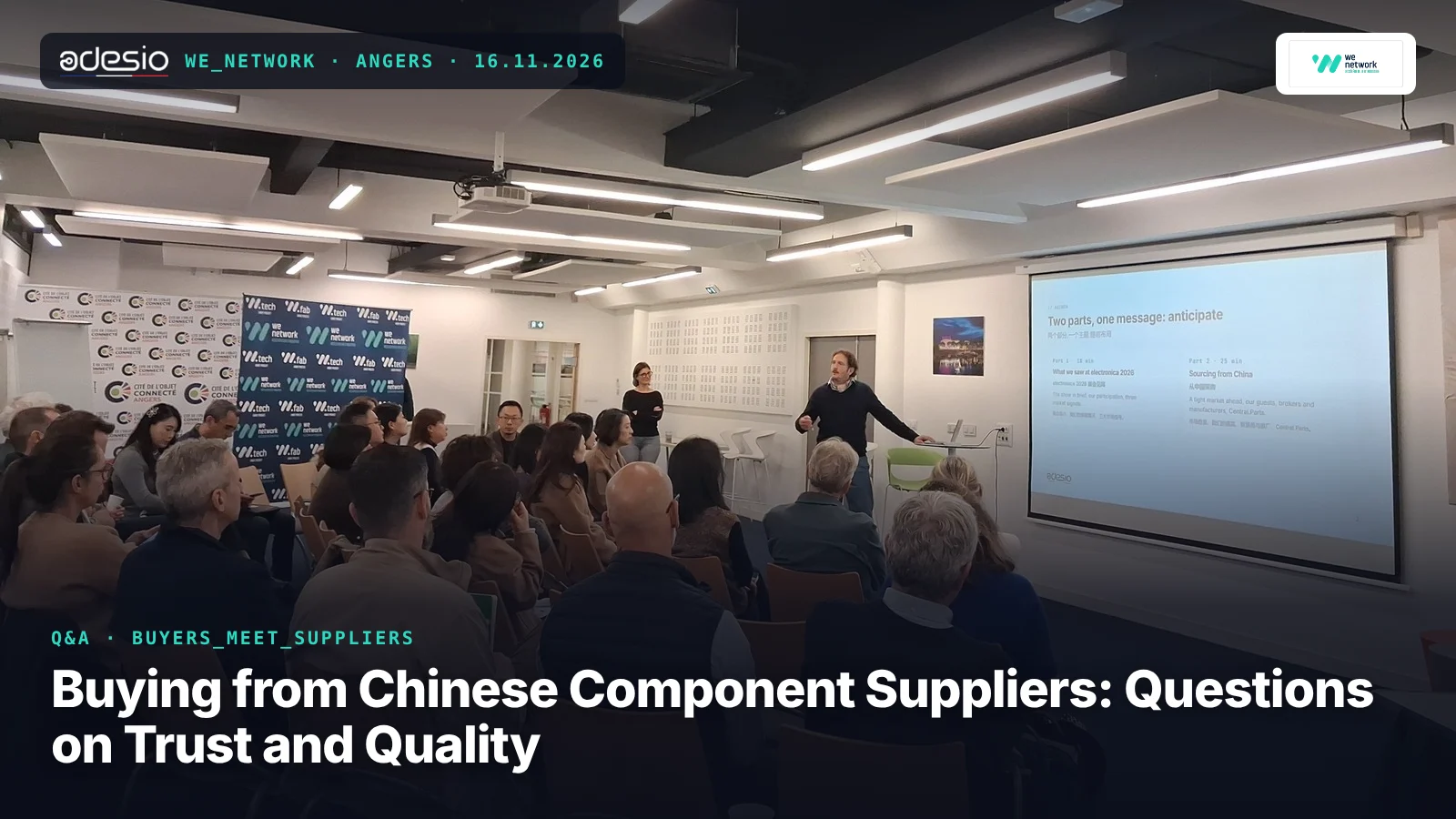
On 16 November 2026, at the Technocampus in Angers, We Network and Adesio brought a delegation of 15 Chinese electronic component suppliers, led by Chris Jiang, face to face with EMS and OEM buyers from western France. After the talk, the floor opened. Almost every question came back to one word: trust.
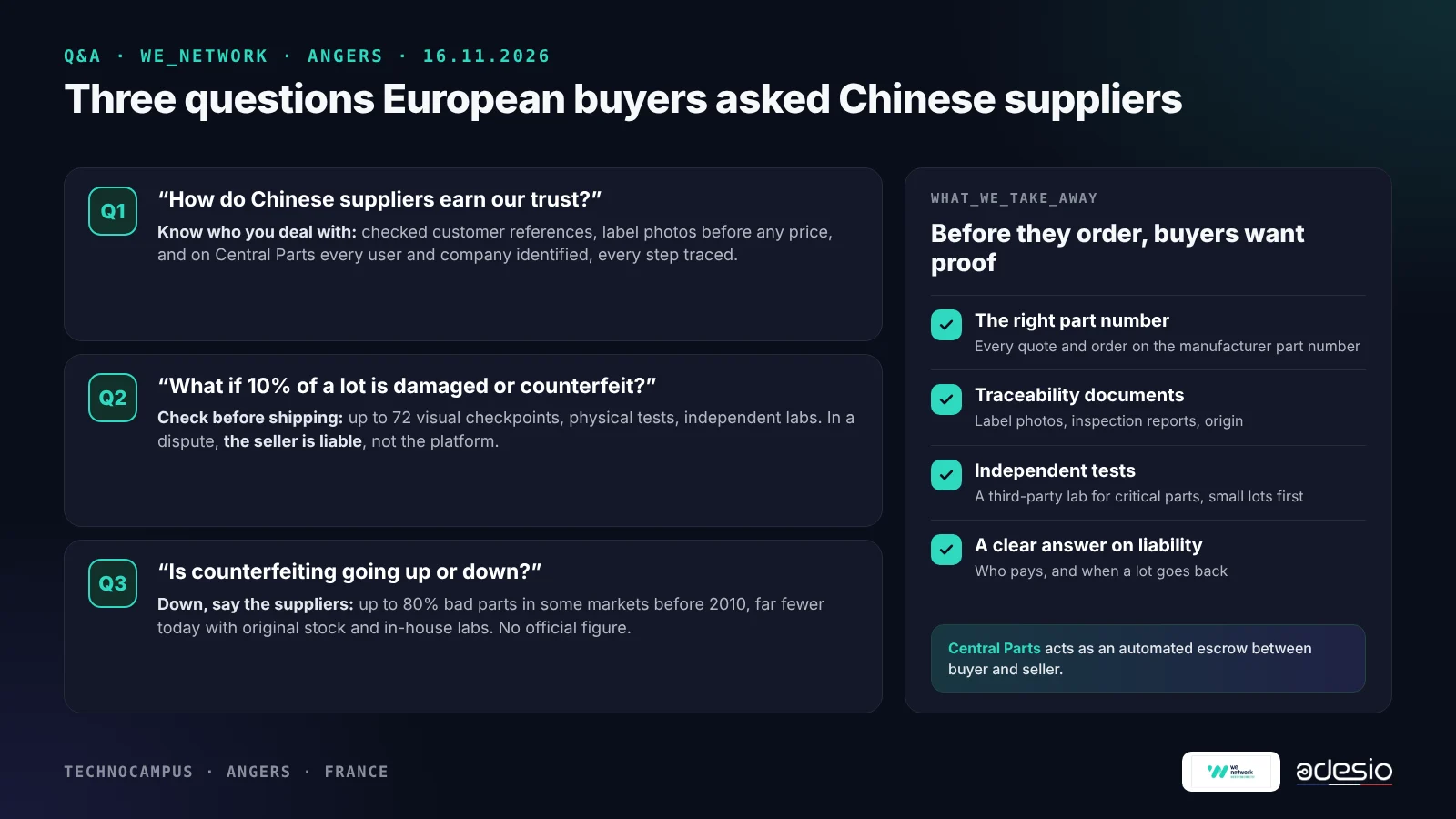
“How do Chinese suppliers earn European market trust?”
A buyer who spent years at large US contract manufacturers explained that big customers impose approved vendor lists. A small company relies on suppliers the large groups already use. So how will Chinese suppliers make their customer references known?
Bertier Luyt, CEO of Adesio: distrust runs both ways. A Chinese broker who receives the same request as ten others sees prices jump, and wonders whether the buyer will still be there when they answer. On Central Parts, every user is identified through WeChat and every company through the Chinese company register, and every step is traced.
Chris Jiang: from 2012, at Converge, she approved the supplier codes of Chinese traders herself. Her checks: public information, information from her network, and a cross-check of the customers, demand and products quoted. Before giving a price, she asks for a photo, usually of the label, for a first filter. Her companies already supply listed companies in China and large global distributors.
“What if 10% of a lot is damaged or counterfeit?”
A chief purchasing officer asked the question every buyer has: a lot arrives paid for and perfectly packed, but 10% of the parts are faulty. How do you prevent it, and what happens if it occurs?
- The part number is the reference. Every quote and every order is made on the manufacturer part number. The supplier delivers that reference.
- Checks before shipping. A visual inspection with up to 72 checkpoints, from the label to the packaging, then physical tests, and for older lots extra tests such as solderability. Many distributors now have their own lab, under ISO-based quality systems.
- Independent labs. Large buyers have their own quality teams. Others use a third-party lab such as White Horse, which also has a lab in Munich. A German distributor serving automotive and defence that the delegation met before France relies on it alone.
- Liability. In a dispute, the seller carries the liability, not the platform. Chris has held preferred supplier and approved vendor status at major EMS providers after strict audits, and has covered replacement costs herself when a lot from the original manufacturer failed a customer's final test.
Bertier Luyt: Central Parts acts as a modern escrow, automated end to end. Contracts stay classic and set when a lot goes back to the sender. The best place to check is before shipping, in Shenzhen or Hong Kong, not after three weeks in a container. Adesio is studying how to build lab testing into Central Parts.
“Is counterfeiting going up or down?”
Chris Jiang gave the history. In the 1980s, the Chinese component market grew on the Guangdong coast from used and rejected parts, refurbished and resold. Before 2010, buying in those markets without serious quality control, up to 80% of parts could be bad. Today there is far more original stock, quality control has tightened, and many distributors run their own labs. Her view: the chance of buying a counterfeit is now very low.
How one manufacturer buys
An OEM in the delegation, founded in 2010 and supplying in-vitro diagnostics, semiconductor test equipment and assembled products, shared his rules:
- every item has an internal part number tied to the manufacturer part number and one brand;
- authorised distributors first, extra caution outside official sources;
- long-standing traders as the base of trust, new suppliers always started on small lots or prototypes;
- contracts, and ISO 9001 incoming inspection at the factory.
What we take away
European buyers are open to Chinese suppliers, but they want proof before they order: the right part number, traceability documents, independent tests when the part is critical, and a clear answer to who pays if something goes wrong.
About the tour: Adesio brings Central Parts to Europe
This article is part of our series on the tour of 15 Chinese electronic component business leaders, led by Chris Jiang and accompanied by Adesio: electronica in Munich, Adesio in Saint-Malo, GYS in Laval, We Network in Angers and Station F in Paris. For Adesio, the tour was also a campaign for Central Parts, the Supply Network Operator launched at electronica 2026. Central Parts gives European buyers one entry point to Chinese component suppliers: stock in a shortage, Chinese equivalents to well-known parts, identified suppliers, an automated escrow, and a website and API that work from Adesio.
- #Supply Chain Risk Mitigation
- #Electronic Components
- #Obsolescence & shortages
- #Events & Trade Fairs
Frequently asked questions
How many suppliers is Adesio connected to?
More than 150 manufacturers and distributors worldwide, including Arrow, Avnet, DigiKey, Farnell, Mouser and Texas Instruments.
I’m a distributor or manufacturer. How do I connect my API to Adesio?
Email contact@ades.io with the subject “API partnership”. Once connected, your stock and prices are visible to EMS and OEM buyers on Adesio, and their orders reach you directly through your API.
Comment Adesio m'aide-t-il à comparer les offres des fournisseurs chinois ?
Adesio est connecté par API à des fournisseurs du monde entier et affiche côte à côte le prix, le stock et le délai en temps réel sur chaque ligne de BOM : l'offre d'un broker se compare au reste du marché sur les mêmes critères. Voir la connectivité directe avec les fournisseurs.
Discover the Perfect Order Engine®
See how Adesio turns your complex BOMs into purchase orders, using your own data.
Related articles
Chinese Component Entrepreneurs Visit Station F in Paris
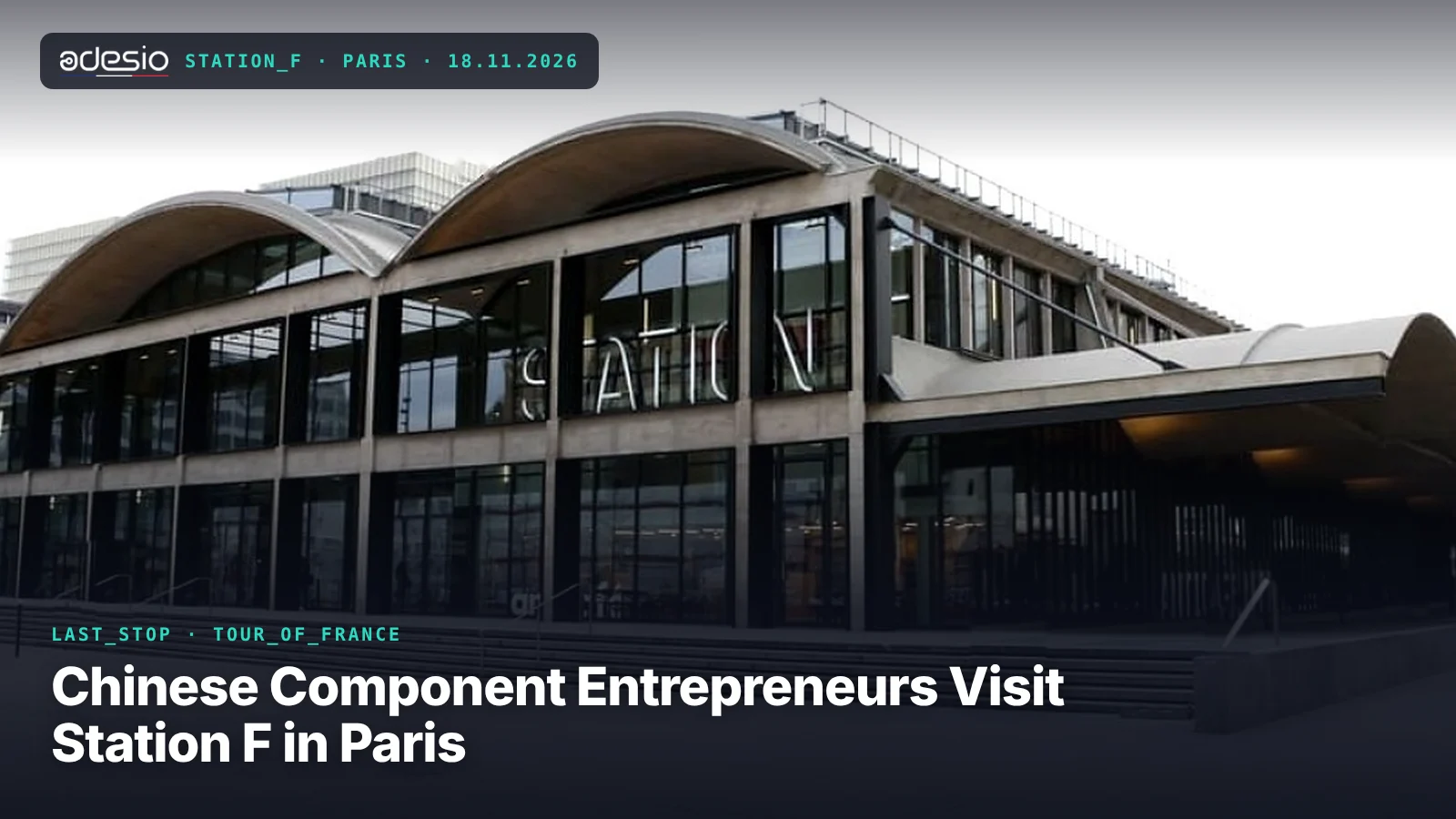
For the last stop of their French tour, Chris Jiang and a group of Chinese entrepreneurs from the electronic component industry visited Station F in Paris with Adesio. They looked at how the world's largest start-up campus supports founders, and especially women founders.
- #Events & Trade Fairs
- #Electronic Components
- #Supply Chain Risk Mitigation
Chinese Electronic Components and European Demand: What the Delegation's Tour Taught Both Sides
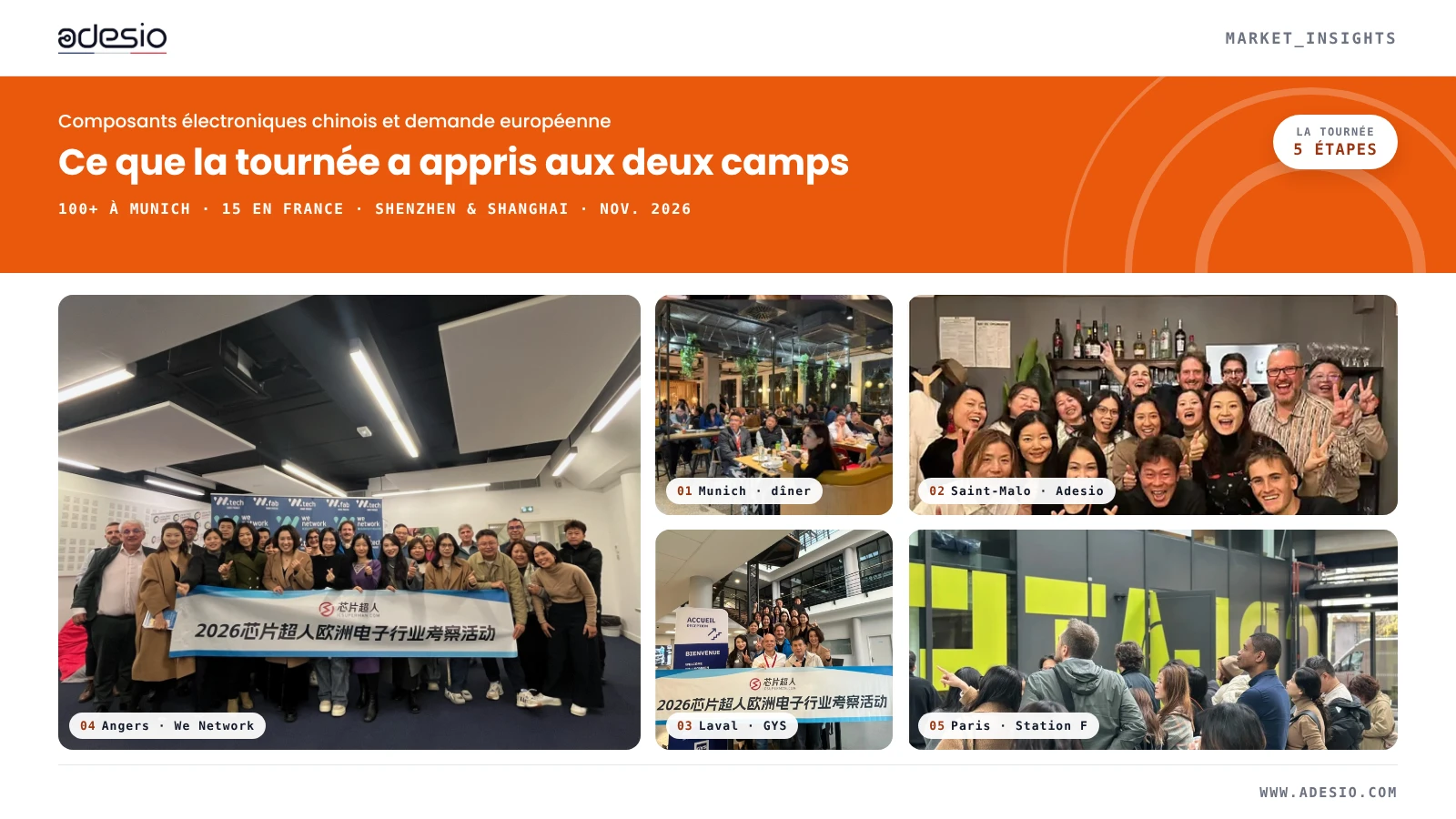
Over 100 Chinese electronic component entrepreneurs attended electronica, with 15 continuing on to France alongside Adesio. The trip sparked a valuable exchange of insights between European buyers and Chinese suppliers on how each market operates and how Adesio bridges the gap between them.
- #Obsolescence & shortages
- #Electronics Ecosystem & Partnerships
- #Supply Chain Risk Mitigation
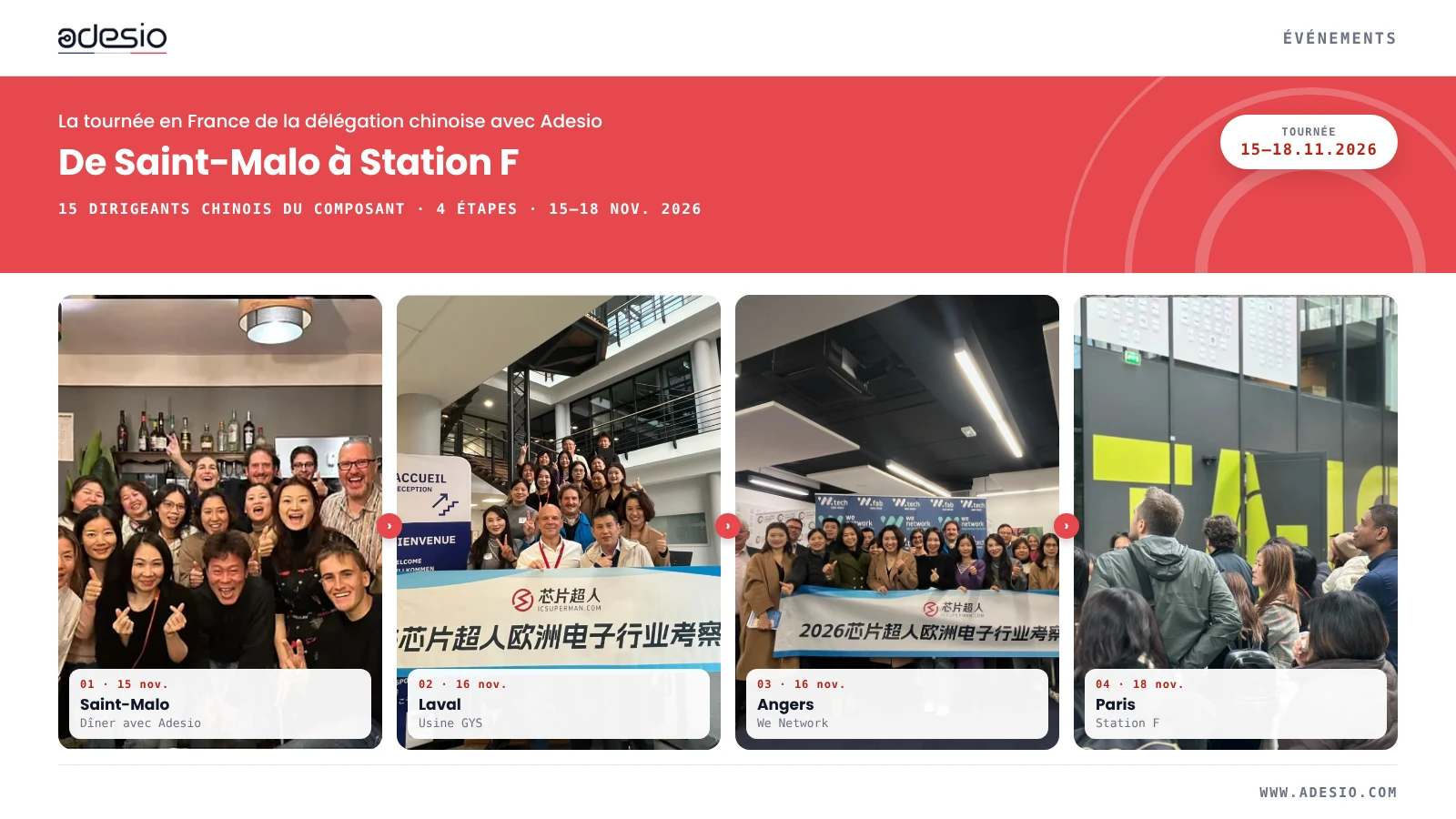
From Saint-Malo to Station F: The Chinese Delegation's Tour of France with Adesio
After electronica, 15 Chinese electronic component business leaders led by Chris Jiang travelled across France with Adesio: a dinner in Saint-Malo, a French factory at GYS, a prototype workshop and a buyers' meeting at We Network, and the start-ups of Station F. Here is the trip, stop by stop.
- #Electronics Ecosystem & Partnerships
- #Obsolescence & shortages
- #Supply Chain Risk Mitigation