Electronic Component Lead Times in 2026: What the Data Shows
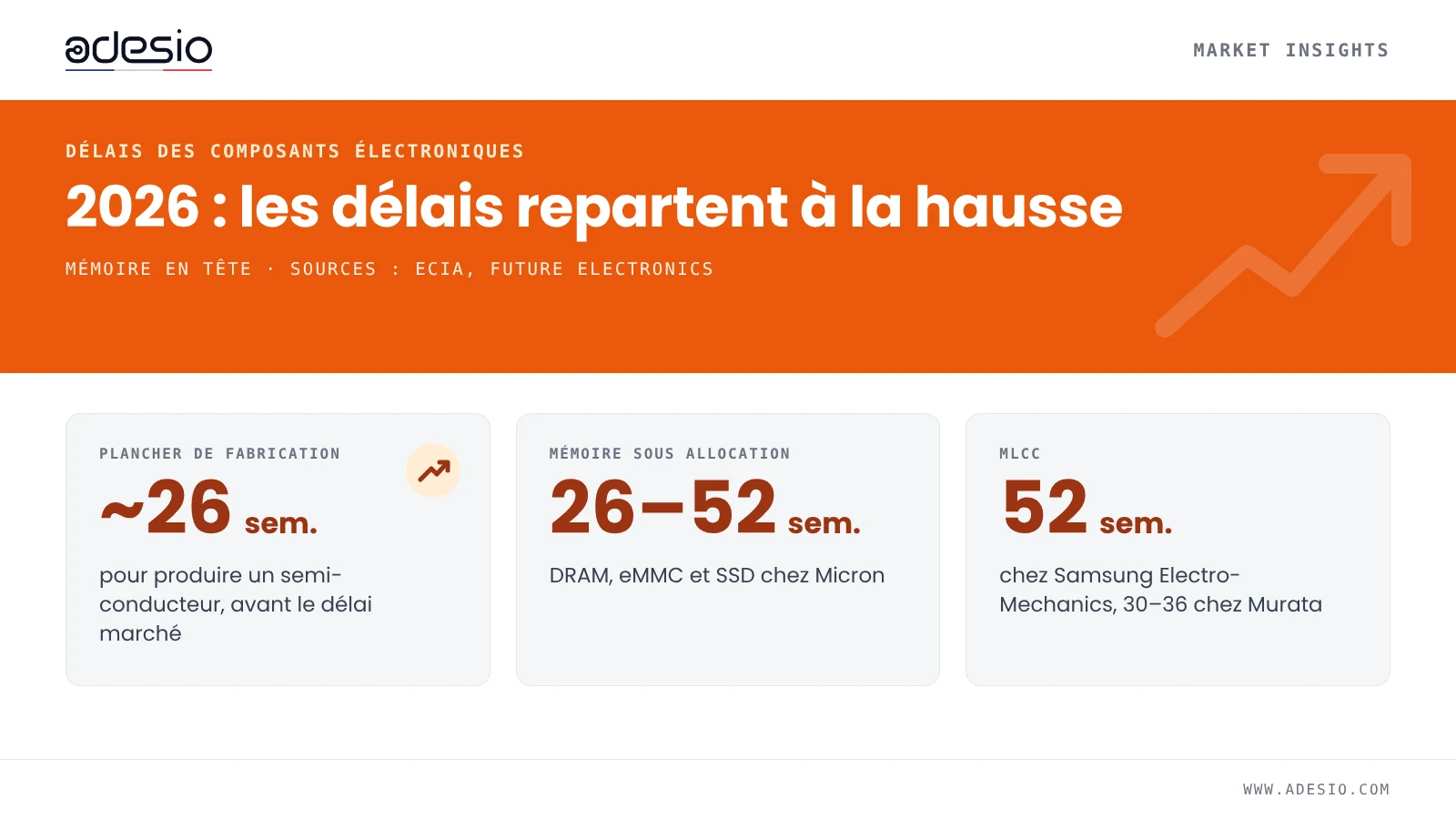
A semiconductor takes about 26 weeks to build before the market adds a single week. In 2026, electronic component lead times are rising again, with memory under the most pressure. That makes lead time a risk to price into every quote line, not a figure to check once a quarter.
What sets the floor
Lead time is the time from order to delivery. It starts with manufacturing. According to the ECIA, the semiconductor manufacturing cycle runs about 26 weeks:
- up to 12 weeks for wafer fabrication alone;
- 4 to 8 weeks more for assembly and test.
That is the base. Demand, backlog and allocation can only add to it, which is why quoted lead times move well beyond 26 weeks as soon as supply tightens.
The 2026 direction: up, memory first
In the ECIA's 2026 Industry Pulse surveys, a majority of participants reported rising semiconductor lead times. Memory, DRAM and NAND flash, is under the greatest pressure as suppliers move to allocation. Micron has already sold 75% of its planned 2027 output, as we covered in our article on the memory chip shortage.
The exact week count on one part matters less than the trend: lead time is volatile and going up, so a figure that was safe last quarter may not be safe today.
Lead times by component category
The figures below come from the Future Electronics market conditions report of 19 October 2026, as compiled by O2tech. The range inside one category is wide, so each figure names its manufacturer. It is a snapshot: check the live figure before you quote.
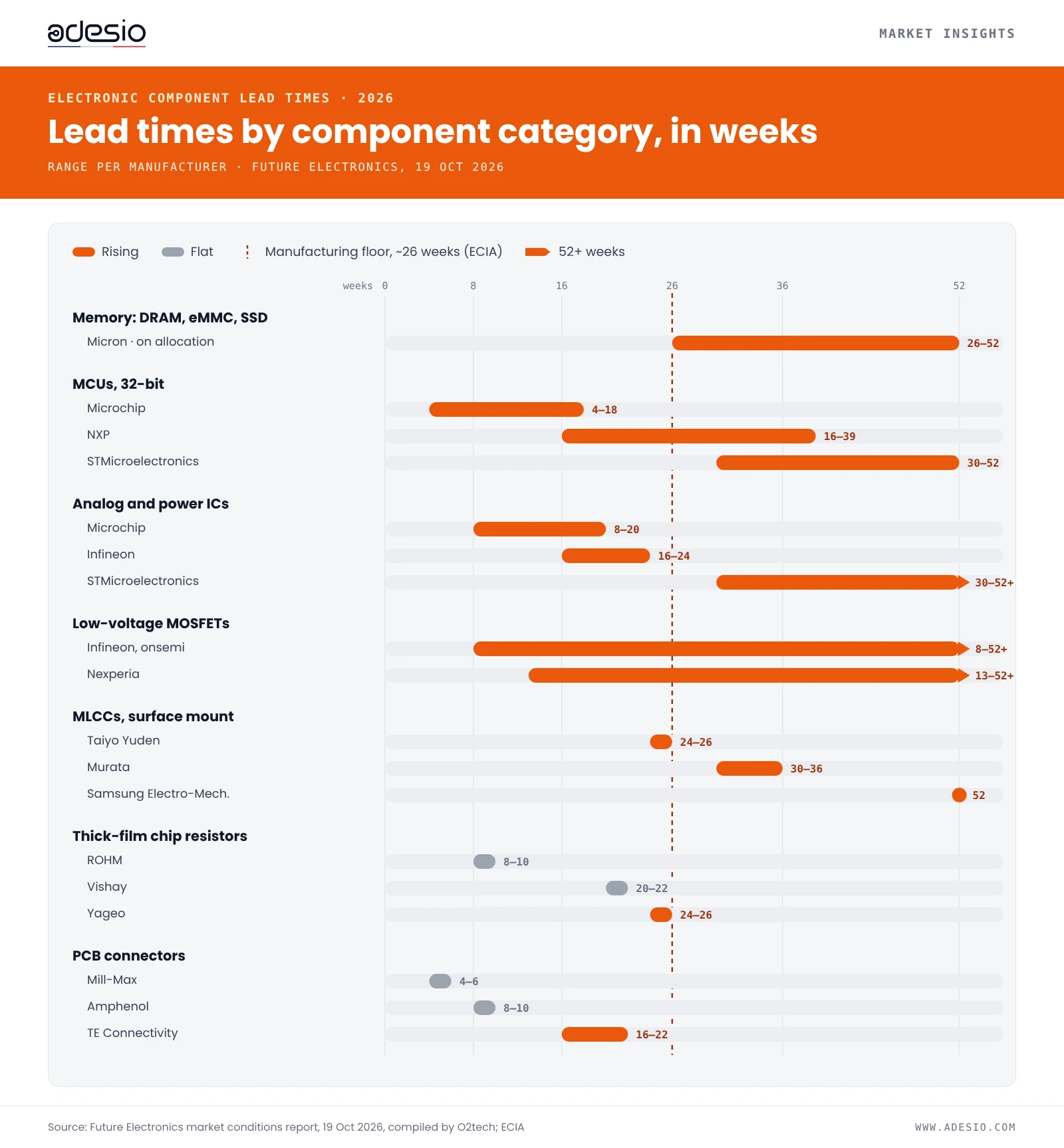
Sourceability's Q3 report (15 October 2026) points the same way: several Micron memory technologies and several STMicroelectronics MCU families have reached 52 weeks.
How lead time reaches a quote
A long-lead part rarely looks dangerous on the BOM. It is an ordinary line with a price and an implied delivery date, until a distributor answers with 30+ weeks or an allocation. By then the quote has gone out, or the order is won on a promise you cannot keep at the price you set. As with obsolescence and counterfeit risk, the damage comes from finding out after you have committed. We saw the same pattern with the DDR2 price rise after SIDO.
Price lead time at the moment you quote
The reliable approach is to re-check lead time on every line when you quote, not after:
- Check current availability and lead time per source for every line of the BOM.
- Flag long-lead and allocated parts first, starting with memory and MCUs.
- Surface approved alternates wherever a line is at risk.
- Quote on today's data, not last quarter's.
This is what the Perfect Order Engine® automates. Adesio reads your BOM and shows real-time pricing, stock and lead time per supplier, while Critical Parts Intelligence flags lifecycle and supply risk on every line, so a long-lead part is caught before it reaches a customer quote.
- #Obsolescence & shortages
- #Electronic Components
- #Supply Chain Risk Mitigation
Frequently asked questions
Quel est le délai typique d'un composant électronique ?
Il varie selon la référence et le marché, mais la fabrication fixe le plancher. Selon l'ECIA, le cycle de fabrication d'un semi-conducteur dure environ 26 semaines, auxquelles s'ajoutent allocation, carnet de commandes et demande.
Quels composants ont les délais les plus longs en 2026 ?
La mémoire d'abord : DRAM, eMMC et SSD chez Micron, de 26 à 52 semaines sous allocation. Certains MCU 32 bits, circuits de puissance, MOSFET et MLCC atteignent aussi 52 semaines selon le fabricant.
Comment gérer les longs délais dans un devis ?
Revérifiez délai et disponibilité sur chaque ligne de la BOM au moment du devis, signalez d'abord les références à long délai ou sous allocation, et préparez des équivalents approuvés pour chaque ligne à risque.
Discover the Perfect Order Engine®
See how Adesio turns your complex BOMs into purchase orders, using your own data.
Related articles
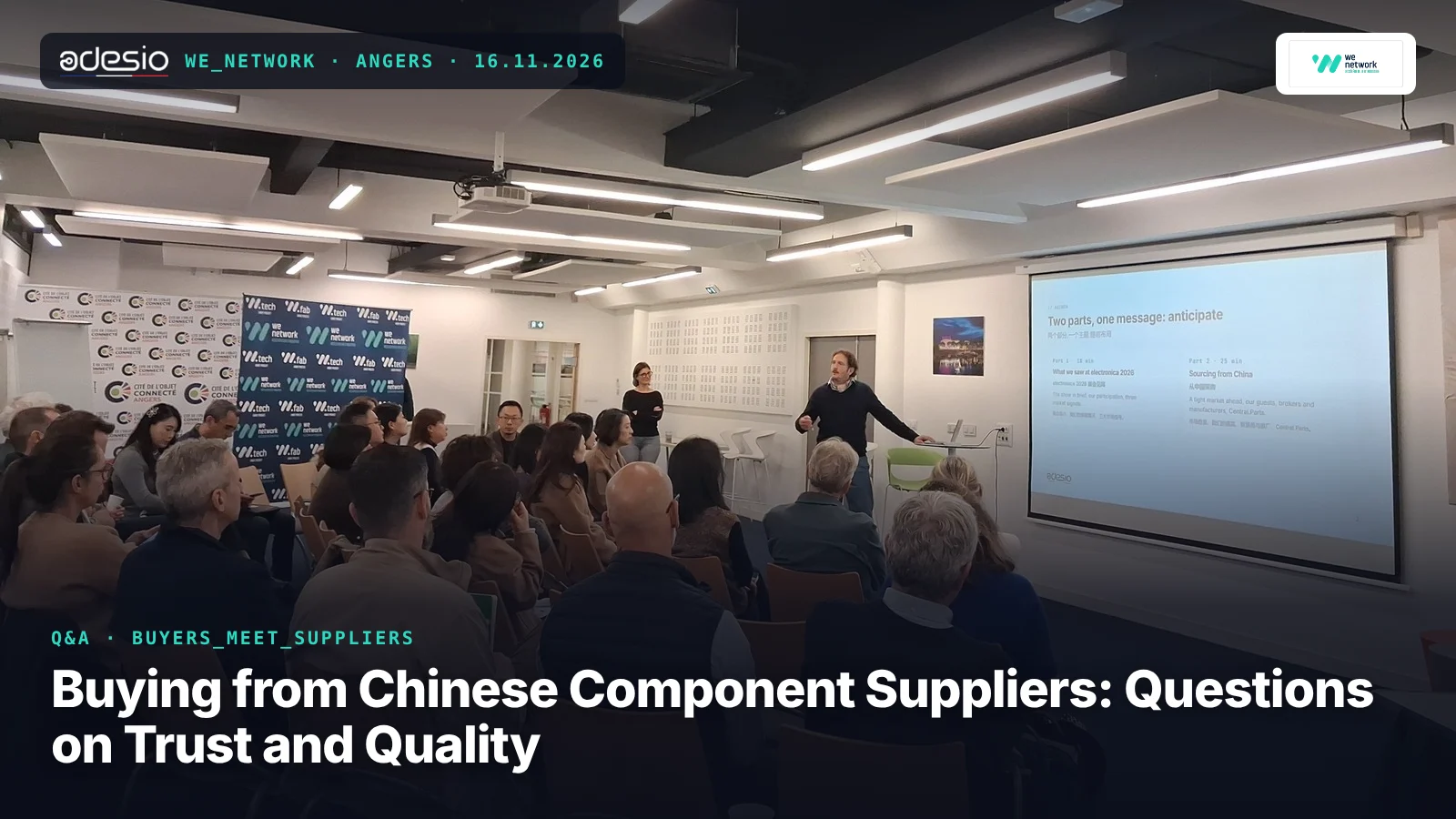
Buying from Chinese Component Suppliers: Questions on Trust and Quality
How do you know a part from a Chinese supplier is genuine, and who pays if it is not? At We Network in Angers, European buyers asked a delegation of 15 Chinese component suppliers. Here are their questions and the answers.
- #Supply Chain Risk Mitigation
- #Electronic Components
- #Obsolescence & shortages
- +1
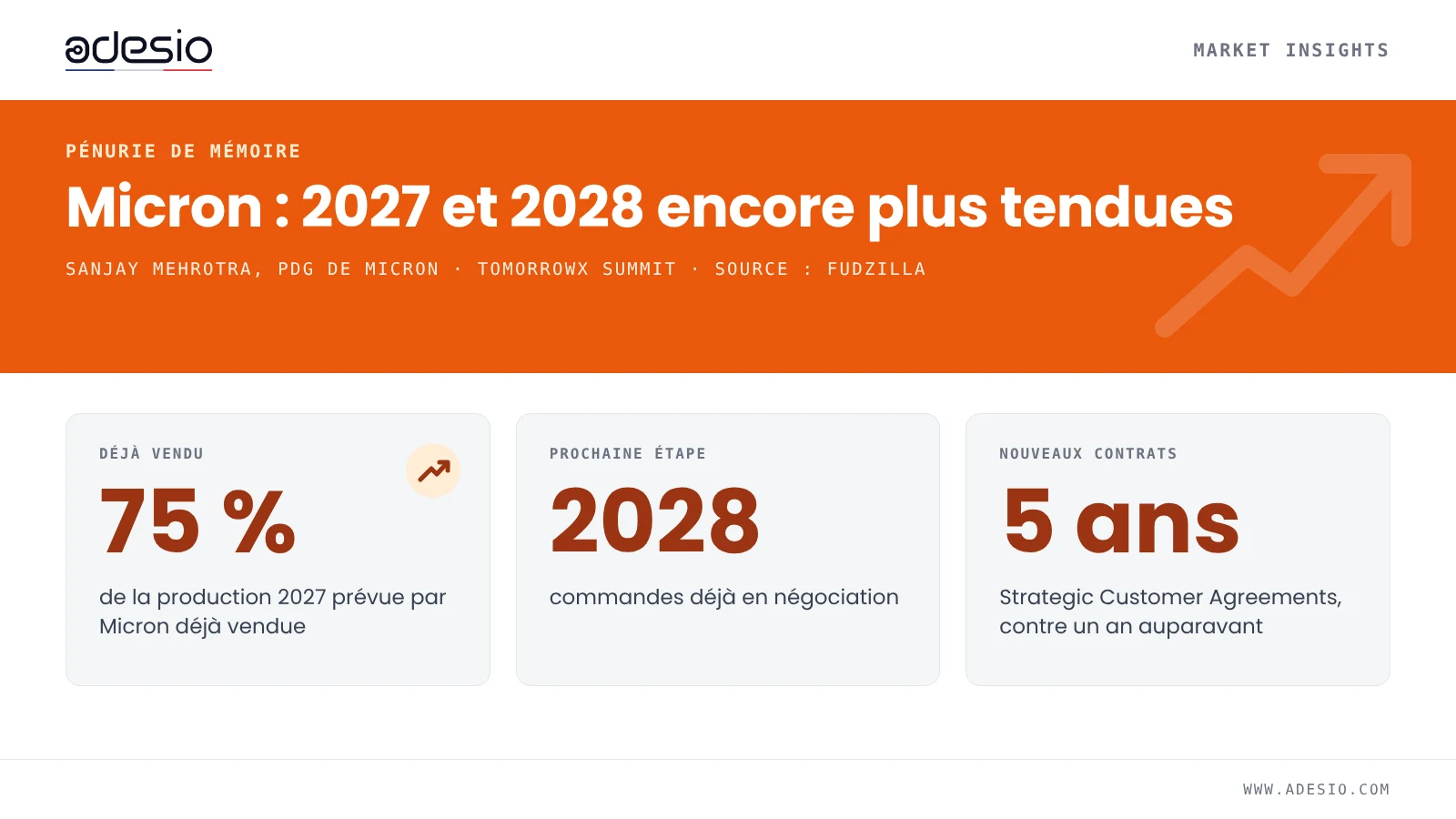
Memory Chip Shortage: Micron Warns 2027 and 2028 Will Be Even Tighter
Micron has already sold 75% of its 2027 memory output and expects supply to tighten into 2028. Here is what the memory chip shortage means for OEM and EMS buyers, and four steps to take now.
- #Procurement Automation
- #Obsolescence & shortages
- #Supply Chain Risk Mitigation

Chinese Electronic Components and European Demand: What the Delegation's Tour Taught Both Sides
Over 100 Chinese electronic component entrepreneurs attended electronica, with 15 continuing on to France alongside Adesio. The trip sparked a valuable exchange of insights between European buyers and Chinese suppliers on how each market operates and how Adesio bridges the gap between them.
- #Obsolescence & shortages
- #Electronics Ecosystem & Partnerships
- #Supply Chain Risk Mitigation